Draft preview — not published. Call (956) 303-2209 to confirm availability.

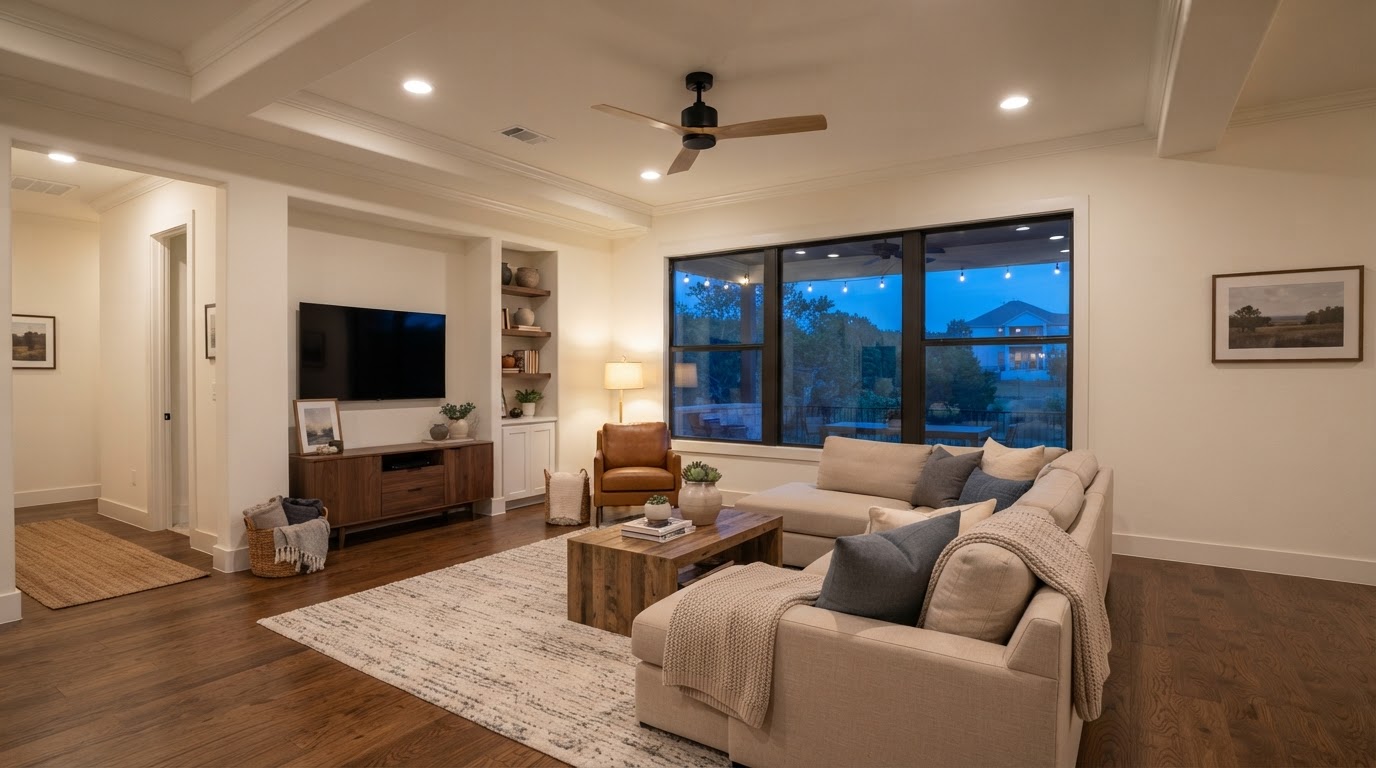
Finished residential living room with a modern ceiling fan installed flush against a clean white ceiling and warm recessed can lights glowing at blue hour

Edinburg, TX

Ceiling Fan Installation in Edinburg, TX

A ceiling fan install starts with the support and the wiring — and a lighting box is not automatically fan-rated. We check the fan-rated outlet box, the mounting bracket, the ceiling support, the blade clearance, and the control compatibility before the fan goes up, so the install is safe under the fan it actually carries. Tell us the fan and the room and we will follow up to confirm details and availability.

This is a project inquiry, not a confirmed booking or electrical work contract. Call to confirm urgent availability.

Request a Ceiling Fan Estimate

Tell us the fan and the room. We'll follow up to confirm details and availability.

Optional text notifications

Consent is not a condition of any purchase. Carriers are not liable for delayed or undelivered messages. See our Privacy Policy and Terms & Conditions.

When should you call?

Support and wiring come before the fan

A wobbly fan, a noisy motor, a new location, or a covered patio that needs air movement are all reasons to call — and the right next step depends on the support, the wiring, and the exposure. A lighting box is not automatically fan-rated, a heavier fan needs support that holds the weight, and an outdoor fan needs a rating for the exposure. We check the fan-rated outlet box, the mounting bracket, the ceiling support, the blade clearance, and the control before we install.

If you are seeing sparks, smoke, heat, or a burning smell, that is an immediate safety issue — move away from the equipment and call 911. For anything else, a written estimate after an on-site assessment is how we keep the install honest and the price tied to your actual project.

What does the service include?

Three kinds of ceiling fan work

Each block below is its own kind of fan project — and each starts with the support and the wiring checked before the fan goes up. Not every lighting box is fan-rated, and not every fan needs a new circuit.

Finished residential living room with a modern ceiling fan installed flush against a clean white ceiling and warm recessed can lights glowing at blue hour

Replacement fan installation

Swapping an old or failing ceiling fan for a new one is the most common fan call in Edinburg homes — a worn motor, a noisy fan, or a unit that wobbles. The existing ceiling box has to be checked for fan-rated support and the wiring and wall control have to suit the new motor and receiver before anything goes up, because a lighting box is not automatically fan-rated.

We inspect the existing fan-rated outlet box and mounting bracket, check the ceiling support and the downrod clearance for the blade sweep, and verify the wiring, the wall control, and any remote receiver are compatible with the new motor. A fan that weighs more than the old one, or that sits on a box not rated for fan support, is a support problem we flag before we install — not a wobble we chase after.

A replacement fan mounted on support that actually holds the fan, balanced and demonstrated with the controls explained — and the honest limit that a box not rated for fan support is a support job, not a hang-and-hope install.
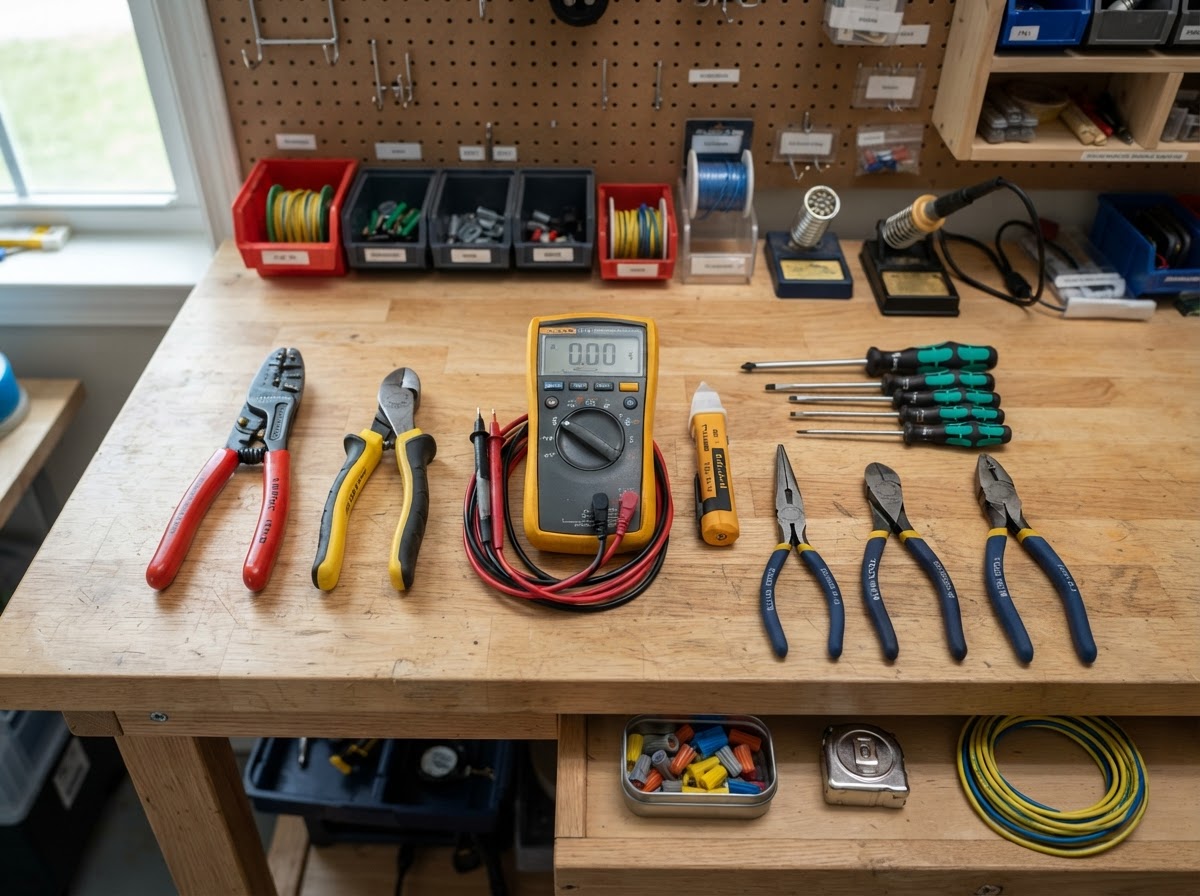

Appropriate ceiling fan support hardware and a mounting bracket laid out on a clean workbench with hand tools

New fan location

Adding a ceiling fan where there was not one before — a bedroom, a living room, or a covered patio — means planning the support, the circuit route, and the control before the fan goes up. The fan-rated box has to be anchored to ceiling support rated for the fixture weight and the blade sweep, and the circuit has to reach the location without overloading a run.

We assess the ceiling support and the blade clearance for the new location, plan the fan-rated outlet box and mounting bracket to the joists or blocking, and route the wiring and the wall control or remote receiver to the spot. Where a new circuit or a relocated junction box is needed, that wiring is scoped in writing first — so a fan install does not quietly become a wiring job without a quote.

A new fan location with support, wiring, and controls planned up front, and the circuit checked before the fan is hung — so the install is safe under the fan it actually carries rather than added to an already-loaded run.

Damp-location-rated outdoor ceiling fan installed under a covered patio overhang on a South Texas stucco home in warm evening light

Covered outdoor fan

A ceiling fan under a covered patio, a porch, or a lanai in Edinburg has to handle heat, humidity, and the exposure under the overhang. The fan needs a damp-location rating (or a wet-location rating where the exposure warrants it), a weather-rated junction box, and enough clearance for the blade sweep above head height.

We match the fan rating to the exposure — damp-location for a covered patio, wet-location where the exposure is greater — confirm the junction box is weather-rated and the support is fan-rated, and check the downrod length and blade clearance for the ceiling height. The control is set to a wall switch, a remote receiver, or both as the location needs, and we distinguish a fan-rated support issue from a wiring issue before we recommend work.

An outdoor fan rated for where it sits, mounted on fan-rated support with weather-rated wiring and the right clearance — and the honest limit that a fan not rated for the exposure is a problem waiting to happen, not a temperature-reduction promise.

What should a careful assessment cover?

Four things worth asking about

01

Documented assessment

Ask how the fan-rated support and the wiring are checked before the fan goes up — a lighting box is not automatically fan-rated, and a heavier fan needs support that holds the weight. The documented assessment keeps the install tied to the real conditions.

02

Written scope

Ask for the fan supply, the support hardware, any new wiring, the controls, access, permits, and any ceiling repair responsibility in writing before the install is scheduled — so the price follows the scope.

03

Compatible equipment

Ask whether the fan, the fan-rated box, the mounting bracket, and the control are matched to the motor and the location — so the fan runs steady rather than wobbling or fighting the control.

04

Permit and inspection planning

Ask how permits and a final inspection are handled where the fan adds a circuit or changes the service, and how a contractor assessment differs from a municipal inspection — so the right step happens in the right order.

How does the work proceed?

From fan selection to operation check

1

Fan and site selection

You tell us the fan, the room, and the project address. We confirm coverage and any diagnostic fee before booking.

2

Assess support and controls

On site, we check the fan-rated outlet box, the mounting bracket, the ceiling support, the blade clearance, and the wall control or remote receiver compatibility — before anything goes up.

3

Written supply and install scope

You get a written estimate with the fan supply, the support hardware, any new wiring, the controls, access, and permits where required — plus what is excluded — so you can compare and decide.

4

Approved installation

After you accept the quote, the fan is installed by qualified professionals on fan-rated support — no how-to mounting or wiring steps here, and no work until you have approved the scope.

5

Balance and operation checks

We balance the blades, test the motor under load, and demonstrate the controls — with no guarantee of a temperature reduction or energy savings we cannot measure.

What affects cost?

What shapes the ceiling fan quote

Your ceiling fan estimate reflects the assessed scope, materials, and access — the drivers below shape it. If you supply the fan, we check the fan-rated support, the wiring, and the control compatibility before we install — and we confirm any ceiling repair responsibility up front.

Ceiling height and blade clearance

The ceiling height and the downrod length set the blade clearance above head height and below the ceiling — assessed on site so the fan sweeps safely rather than clipping a beam or sitting too high to move air.

Existing fan-rated support

Whether the existing outlet box and mounting bracket are fan-rated and anchored to ceiling support — checked before we install, because a lighting box is not automatically fan-rated and a heavier fan needs support that holds the weight.

Access to the junction box

How the ceiling access shapes the labor — whether the box is reachable from above through an attic or needs the ceiling opened — assessed up front so the price reflects the actual conditions, not a best case.

New wiring where needed

Where a new fan location needs a new circuit or a relocated junction box, that wiring is scoped separately and in writing — so a fan install does not quietly become a wiring job without a quote.

Control compatibility

Wall switches, remote receivers, and smart controls matched to the motor and the receiver — so the fan responds to the control rather than the control fighting the motor, with no universal compatibility promise.

Fan supply

Whether we supply the fan or you do — if you supply it, we check the fan-rated support, the wiring, and the control compatibility before we install, so an owner-supplied fan is not mounted into support or a circuit it does not suit.

No price on this page is a binding commitment. Final price is set by the assessed written scope, provided after an on-site assessment — not a flat rate, and no promise of temperature reduction or energy savings.

Damp-location-rated outdoor ceiling fan installed under a covered patio overhang on a South Texas stucco home in warm evening light

Planning ceiling fan work in Edinburg

Local context for your fan project

Edinburg sits in Hidalgo County along the US-281 and I-69C corridor, with the UTRGV campus and University Drive anchoring a lot of residential and small-commercial growth. Whether you are off Freddy Gonzalez or closer to the expressway, the planning steps are the same: check the fan-rated support, confirm the wiring and the control, and scope the install in writing.

Ceiling height, access to the junction box, the location and exposure, the control choice, and the permit scope all shape the work — and Edinburg lists the 2023 NEC as the adopted code, with permit requirements varying by scope and jurisdiction. We plan permits where required rather than guessing which jobs need one.

A contractor assessment is our on-site review to scope the fan install; a municipal inspection is a separate step by the city's inspection authority, typically tied to a permit. They are different roles, and one does not replace the other.

Your ceiling fan questions answered

Frequently asked questions

Can any ceiling box support a fan?

+
No. A ceiling box has to be fan-rated and anchored to ceiling support that holds the fixture weight and the blade sweep — a lighting box is not automatically fan-rated, and a heavier fan needs a mounting bracket and support rated for it. We check the box, the bracket, and the support before we install, because a fan on a box not rated for it is a wobble — or a fall — waiting to happen.

Can you install a customer-supplied fan?

+
Yes. If you supply the fan, we check the fan-rated support, the wiring, and the control compatibility against the motor and the receiver before we install — so an owner-supplied fan is not mounted into support or a circuit it does not suit. The install scope is put in writing first, with any support or wiring work called out separately.

Is a new circuit needed?

+
Not always. A replacement fan usually fits the existing circuit; a new fan location may need a new circuit or a relocated junction box, depending on the route and the load. We assess the circuit and scope any wiring separately and in writing, so a fan install does not quietly become a wiring job without a quote. See Wiring Installation.

What fan suits outdoors?

+
A fan under a covered patio needs a damp-location rating and a weather-rated junction box; a more exposed location may need a wet-location rating. We match the fan rating to the exposure, confirm the support is fan-rated, and check the downrod and blade clearance for the ceiling height — because a fan not rated for the exposure is a problem waiting to happen.

Can remote controls be installed?

+
Yes — a wall switch, a remote receiver, or both can be set up where the motor and the receiver support them. We check the control compatibility with the motor before we install, because not every remote works with every fan, and we do not promise universal compatibility. The control is demonstrated as part of the operation check.

What affects cost?

+
Ceiling height and blade clearance, existing fan-rated support, access to the junction box, any new wiring, control compatibility, and whether we supply the fan or you do. No price on this page is a binding commitment — final price is set by the assessed written scope, and your estimate reflects the scope, materials, and access.

Request a ceiling fan estimate

Tell us the fan and the room

Share the fan, the location, and the project address. We will follow up to confirm details and availability, then assess on site and send a written estimate. This is a project inquiry, not a confirmed booking or electrical work contract — no work is scheduled until you accept the quote.

Request a Ceiling Fan Estimate

Tell us the fan and the room. We'll follow up to confirm details and availability.

Optional text notifications

Consent is not a condition of any purchase. Carriers are not liable for delayed or undelivered messages. See our Privacy Policy and Terms & Conditions.

Ready to start?

Choose your next step

Send the fan and the project address, or call to talk it through first. We follow up by phone to confirm details and availability, then assess on site and send a written estimate — no work is scheduled until you accept the quote.

Request a Ceiling Fan Estimate

Tell us the fan and the room. We'll follow up to confirm details and availability.

Optional text notifications

Consent is not a condition of any purchase. Carriers are not liable for delayed or undelivered messages. See our Privacy Policy and Terms & Conditions.